Its a year since I started this blog and I’m glad to mark it with one of the most interesting topics in the world of cricket. I’ve been asked a number of times to write about my opinions on the women’s game, but in all honestly I didn’t feel I had enough knowledge around the subject to do it justice. However, with the Women’s T20 world cup kicking off this week, I thought ill start with a bit of an overview with this post looking at history, the evolution and the future
History
The first time I had any exposure to the women’s game was in 2005, when the semi finals of the world cup were shown on Sky Sports in the UK. I had heard of a names on show such as Karen Rolton, Mithali Raj, Mel Jones and Charlotte Edwards, but never really watched a match on TV. The skills on display were great, but perhaps inconsistent within and across the teams. The athleticism, and focus on fitness was also not necessarily what one would assume from professional athletes. The other stark difference to the men’s game was also the lack of crowd and atmosphere.
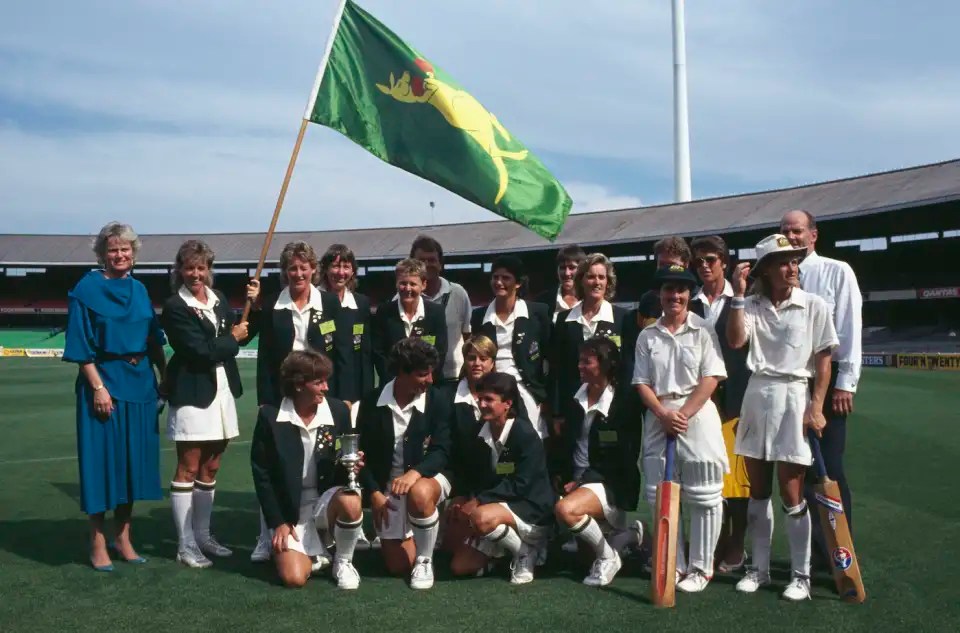
However, 2005 was still a world away from where the women’s game started. The first women’s international match was played in 1934. Cricket as a whole was an elitist sport played by a few nations in the world, and even more so in the women’s sport, with England, Australia and New Zealand remaining the only test playing nations until 1960. The the first women’s world cup was held in 1973 even before the men’s edition in 1975, however it failed to really establish itself as a professional sport.
Women as a whole in society all across the globe have had to fight against prejudice, inequality, discrimination and sadly cricket was no different. Even in what we might call the “first world” nations such as England, women were never really encouraged to play cricket, or provided the required infrastructure to meet basic requirements. In 1963, England captain Len Hutton famously said during a charity match against a women’s side that women playing cricket was “absurd, like a man trying to knit” (the women went on to win the match). Views like Hutton’s were once common, which has meant that women have often been absent from official histories of the game1
I recently watched a documentary about one of England’s greatest ever captains Charlotte Edwards, who narrated having to play for men’s teams, in her early careers, not having female changing rooms and of course having to cope with constant doubts of her ability simply because she’s a female. Other countries in the commonwealth such as India, Pakistan, Sri Lanka etc who had flourishing Men’s teams from the 80s, didn’t have a presence at all in the women’s game. The challenge here was compounded with religious/cultural biases at times forbidding women to try and even play the sport let alone try and go professional. Even now girls such as Bisma Amjad (Pakistan) and Shefali Verma (India) have had to cut their hair, pretend to to boys to play club cricket and try and make a name for themselves in the sport.

Evolution
Luckily through the 90s and at the turn on the 21st century even though biases, prejudice etc still remained, cricket as a commercial product started its growth trajectory. As the men’s game started to grow there was hope for the women’s game too. In my personal view there were 3 key shifts which have helped women’s cricket get to the point it is in today (1) Structure, Investment & Governance (2) Quality of the Product (3) T20 Cricket. Looking at the shifts you can clearly see the sequence of occurrence which has fuelled the evolution.
- Structure, Investment & Governance – From 1993, the Women’s 50 over world cups consistently had a minimum of 8 teams participating. However, apart from World Cups, the rest of the cricket played in the women’s game didn’t really attract much attention. In 2013 England and Australia introduced a multi format series with a point based system which landed well with broadcasters and fans alike and the tradition has continued ever since. The other key milestone in 2014 was the Australian Women’s team becoming the first team to introduced professional contracts. For the first time ever cricket was a viable career option for women providing financial security and a pathway for a full time career. This move prompted other boards such as England, New Zealand. In 2022 the BCCI (India) also announced equal match fees for both men’s and women’s cricketers, as another step in the direction of gender equity in cricket.
- Quality of Product – The 2017 Women’s world cup was a big turning point when it came to the quality of the cricket played. Some of the matches, individual performance and excitement created was as good as any global cricket tournament ever. There’s no hiding away from the fact India in the cricketing world is a super power and the performance of the Indian Women’s team in the 2017 edition, really sent the women’s game into overdrive. Names such as Harmanpreet Kaur, Smriti Mandhana, Deepti Sharma bursting on the world stage. The final between England and India at Lords attracted over 180 million viewers worldwide and was played in front of a sell-out crowd of over 26,000.
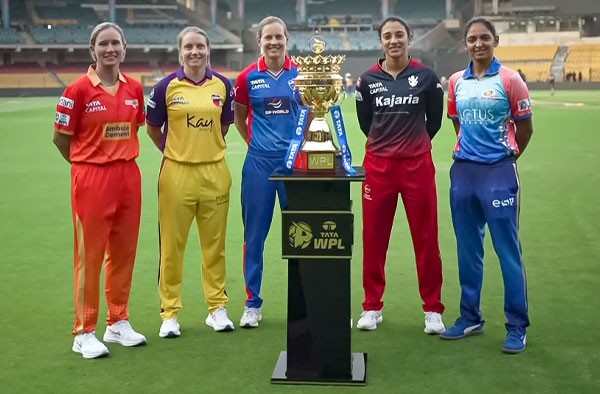
- T20 Cricket– The advent of T20 cricket transformed the men’s game in 2003, but it has also benefitted the women’s game too. The popularity of T20 as a format also bring a new generation of crowds to Womens matches. The 2020 ICC Women’s T20 World Cup Final at the MCG between Australia and India attracted a record 86,174 spectators, the highest ever attendance for a women’s sporting event in Australia and one of the highest globally. Franchise tournaments such as the WBBL in Australia, the WPL in India and the Women’s Hundred in England have ensured that women’s cricket as a commercial product is here to stay. These leagues have also expanded the opportunities for professional women’s cricket enabling greater incentivisation for a new generation of women to take up the sport.
The Future
There is much to be excited about with the womens game and I think the following three factors will determine the future (1) Funding (2) Commercial Viability (3) Technology
- Funding – In January 2020 Cricket Brazil became the first cricket board to award women’s contracts before men. The logic from the president being they are more likely to compete in the women’s game as the gap is not that far off from the current top 10 teams in the world2. A small anecdote of what funding from the ICC can do to help promote the game in countries around the world. Countries like Thailand and Ireland are also on a similar path, and it needs to continue to spread the reach of the game.
- Commercial Viability – In 2024, Deloitte predicts that revenues from elite women’s sport will surpass £1bn, while investment funds have launched with the sole focus of partnering with women’s sport and a surge in demand is pushing the value of women’s teams higher. And in the best examples, investors are bringing much more than capital. They are delivering new collaborations, strategies and initiatives to drive the professionalism and profile of women’s sport for the long-term, reaching new fans and inspiring new participants. Professionalism in cricket is already under way, with women’s players in The Hundred now earning up to £50,000 for the four-week competition, up from £15,000 in 2021. But there’s still some way to go. New investment will help salaries to continue to rise, which in turn will help to ensure the star power on show in The Hundred can keep pace with the global player market.
- Technology – With improved broadcasting technology through high definition streaming, virtual analysis, in play customisation and an improved fan experience will play a huge role in retaining and attracting fan loyalty. The use of data analytics will also be a critical element in improving player performances, fitness and continue to establish women’s cricket as an elite world sport in line with the likes of tennis, women’s football etc.
Even though there is momentum and the society today is headed in the right direction to help women’s cricket on its path. With continued efforts towards professionalism and gender equity there is every chance the sport will mirror the advances in the past few years but on a much larger and more impactful scale.
- https://www.lords.org/lords/news-stories/women-s-cricket-evolution ↩︎
- Szymanski, Wigmore (2023), Crickonomics ↩︎
 Cricket Blog for All
Leave a comment