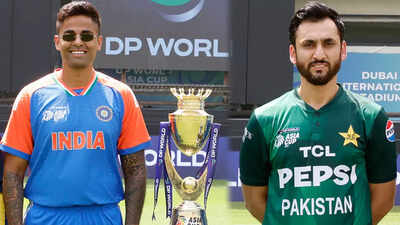
It’s been a while since I last wrote here. I’m still coming down from the dizzying heights of the India–England Test series — a contest that reminded me why I fell in love with cricket in the first place. Now, we’re in a stretch of all white‑ball cricket, with the Asia Cup underway this week. And yes, that means another “long‑awaited” India vs Pakistan clash.
But here’s the thing: the magic isn’t what it used to be. The hype is still there, but the thrill? Not so much.
If you need proof the rivalry’s pull has faded, look no further than Dubai this week. Multiple outlets — including The Week and Firstpost — have reported that tickets for the 14 September India–Pakistan Asia Cup match are still available on official platforms like Platinumlist, just a day before the game. Even the cheapest “General East” seats are priced around ₹8,700 for two, while VIP hospitality boxes run into the lakhs. A decade ago, the idea of unsold seats for this fixture would have been unthinkable.
Reason 1: Forced Draws in Multi team tournaments
Scarcity fuels excitement. Since 2012, India and Pakistan have met 16 times in ICC and ACC events:
- Asia Cup: 7 matches (ODI & T20 combined)
- 50‑over World Cups: 4 matches
- T20 World Cups: 5 matches
And every single time, they’ve been in the same group — a deliberate move to guarantee at least one clash, maximising TV ratings and sponsorship revenue. What was once a rare, high‑stakes encounter now feels like a scheduled episode in a long‑running soap opera.
Reason 2: The Gulf in Capability
The rivalry’s competitive balance has shifted dramatically. Pakistan owned the 80s and 90s. The 2000s were a golden, evenly‑matched era. But since 2010, India has been in control.
ODI Head‑to‑Head by Era
| Era | Matches | India Wins (%) | Pakistan Wins (%) |
|---|---|---|---|
| 1980–1990 | 38 | 11 (28.9%) | 27 (71.1%) |
| 1990–2000 | 48 | 17 (35.4%) | 31 (64.6%) |
| 2000–2010 | 34 | 18 (52.9%) | 16 (47.1%) |
| 2010–2025 | 16 | 12 (75.0%) | 4 (25.0%) |
T20I Head‑to‑Head by Era
| Era | Matches | India Wins (%) | Pakistan Wins (%) |
|---|---|---|---|
| 2007–2015 | 7 | 6 (85.7%) | 1 (14.3%) |
| 2015–2025 | 6 | 3 (50.0%) | 3 (50.0%) |
Era analysis:
- 80s & 90s: Pakistan’s dominance was absolute — Wasim, Waqar, Imran, Miandad — they had match‑winners in every department.
- 2000s: The rivalry was at its peak — Tendulkar vs Akhtar, Sehwag vs Afridi, Yuvraj vs Razzaq. Both sides could win anywhere, and matches were often decided in the final overs.
- Last 15 years: India’s fitness, depth, and consistency have created a gulf. Pakistan’s wins have been rare, and mostly in shorter formats.
Reason 3: The Loss of Context
Most modern encounters are in group stages where both teams progress regardless of the result. The stakes feel diluted. The cricket is often overshadowed by over‑produced promos, celebrity cameos, and endless “greatest rivalry” montages.
Think back to Sharjah, 1986 — Miandad’s last‑ball six off Chetan Sharma. Or Centurion, 2003 — Tendulkar’s upper‑cut off Shoaib Akhtar that still echoes in Indian cricketing folklore. These matches weren’t just games; they were cultural events. The result would be discussed for years, not just until the next tournament.
Conclusion
The India–Pakistan rivalry hasn’t disappeared — it’s been repackaged. Over‑scheduled, commercially engineered, and stripped of the scarcity and balance that made it special. Until the fixture regains its unpredictability, competitive edge, and genuine stakes, it will remain a spectacle in name only.
The Asia Cup will still draw millions of eyes, but for those who lived through the raw tension of the 80s, the balance of the 2000s, and the unforgettable moments that defined an era, the magic is harder to find.
 Cricket Blog for All
Leave a comment